Hazardous tree warning signs like sudden leaning, trunk cracks, fungi growth, and dead branches often appear long before a tree fails completely. Storm damage, disease, root failure, and internal decay are some of the most common causes behind dangerous trees.
Knowing what to look for can help you prevent property damage, avoid injuries, and reduce expensive emergency removal costs. This guide explains the most important warning signs homeowners should never ignore.
Clear Warning Signs of a Hazardous Tree You Should Never Ignore
Most hazardous trees show visible symptoms before collapse. Structural problems and declining health often indicate that professional tree service is needed immediately.
Leaning or Shifting Trees
A tree that suddenly begins leaning after a storm is one of the clearest danger signs. Check the base for exposed roots or soil that looks pushed up, cracked, or buckled, like the ground is being forced apart from below. That kind of heaving usually means the root system is already failing.
Trunk Cracks and Structural Splits
Deep cracks in the trunk weaken the tree’s stability and increase the chance of failure during strong winds. Cracks where major limbs connect are especially dangerous because they create weak points that can split suddenly. In many cases, the internal damage extends much deeper than what appears on the surface.
Fungi, Mushrooms, and Decay at the Base
Mushrooms or fungal growth around the base usually indicate internal rot. Even if the outside of the tree still looks healthy, decay may already be spreading through the trunk or roots. Over time, this type of structural weakening makes the tree increasingly unsafe.
Dead or Hanging Branches (Deadwood)
Dead limbs become extremely dangerous during storms or high winds. Dry, brittle branches can snap unexpectedly and damage roofs, vehicles, or nearby walkways. Large hanging branches over driveways or homes should always be addressed with pruning before severe weather arrives.
Additional Signs That Show Internal Tree Damage
Some hazardous trees decline gradually while the damage remains hidden inside. These subtle symptoms often appear before major structural failure.
Hollow Trunks and Cavities
Large hollow sections reduce the tree’s ability to support its own weight. Unlike fungi or bark damage, cavities don’t always show obvious surface signs. A simple knock on the trunk that sounds hollow is often your only clue. Strong winds or saturated soil can bring a weakened tree down fast.
Bark Damage and Sap Leakage
Peeling bark, cankers, or oozing sap often point to disease, insect activity, or internal stress. When the bark breaks down, the underlying tissue becomes exposed and vulnerable to deeper rot. Dark stains or missing sections along the trunk are signs that damage is already working its way inward. Left alone, these problems weaken the tree’s structure over time.
Thin or Declining Canopy
A thinning canopy is another common sign of poor tree health. Sparse leaf growth, early leaf drop, or uneven foliage compared to nearby trees can indicate disease, root damage, or internal decline. These are often the first visible clues that the tree is deteriorating from the inside. By the time the canopy looks this thin, the damage underneath is usually well underway.
When Hazardous Trees Become an Emergency
Certain situations require immediate action because the risk of collapse increases significantly.
After Storm Damage
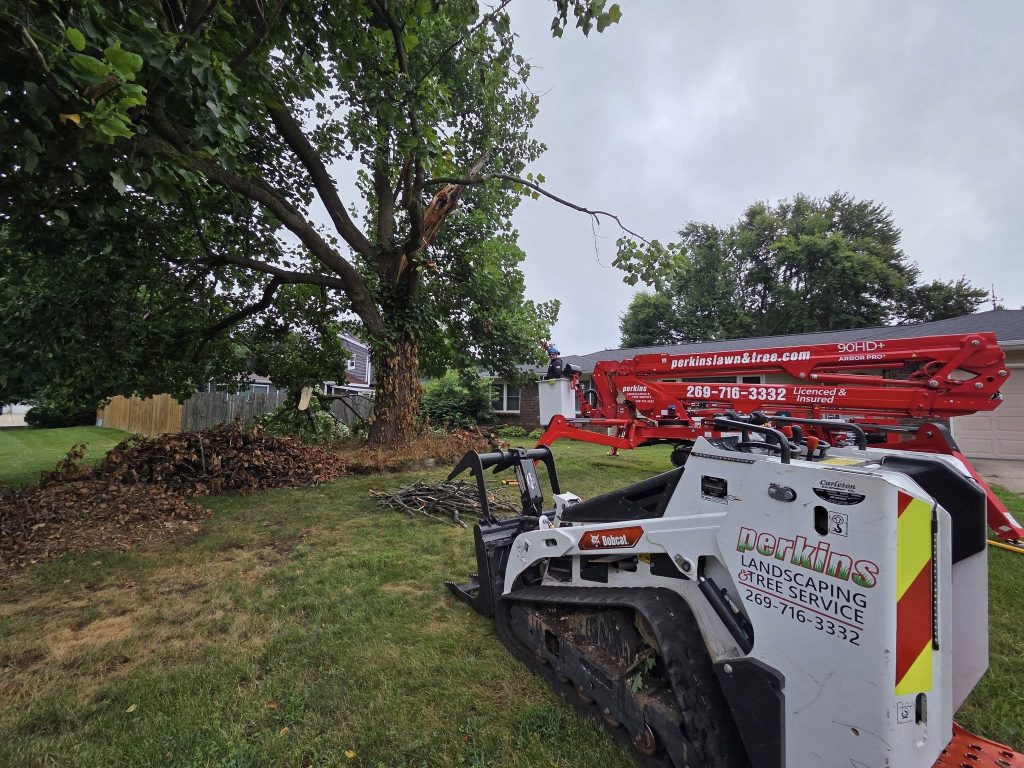
Trees should always be inspected after high winds, heavy rain, ice storms, or wet snow accumulation. Storms often create hidden structural damage that may not be obvious right away. New cracks, hanging limbs, or sudden leaning are all signs that the tree may have become unstable overnight.
Trees Near Structures or Power Lines
Trees growing close to homes, garages, fences, or utility lines create much greater risks when damage develops. Branches hanging over roofs or touching power lines should never be ignored because even a small failure can create expensive or dangerous consequences.
Sudden Structural Changes
Rapid changes in a tree’s appearance usually signal serious instability. Sudden leaning, cracked soil near the roots, major limb failure, or lifting ground around the base often indicate that collapse could happen soon. Immediate professional attention is strongly recommended in these situations.
Insurance and Responsibility for Hazardous Trees
Many homeowners assume insurance covers every tree-related problem. However, a falling tree doesn’t just create a safety risk. It can also create a financial and legal one. So the coverage depends on the cause and condition of the tree.
When Insurance May Cover Damage
Homeowner’s insurance may help cover costs when a storm, lightning strike, or other unexpected event causes a tree to fall onto a covered structure. Policies generally apply to sudden accidents rather than preventable maintenance issues.
When Coverage May Be Denied
Insurance companies may deny claims if the tree showed obvious warning signs that were ignored. Visible decay, disease, or severe structural problems that went untreated are often considered homeowner neglect, which can shift financial responsibility to the property owner.
Why Early Inspection Pays Off
Regular inspections help identify hazardous trees before they become emergencies. Early detection can reduce liability, prevent expensive repairs, and lower the chances of an insurance claim being denied later.
If any of the warning signs in this guide sound familiar, let our tree experts assess the situation and recommend you the solution based on it. Perkin Lawn Care also works with homeowners through the insurance process to help document damage and support your claim.
Contact us today for a free estimate.
Frequently Asked Questions
What are the first signs that a tree is dangerous?
Common warning signs include sudden leaning, deep trunk cracks, fungal growth near the base, dead branches, and visible root damage.
Can a tree fall without warning?
Most trees show visible symptoms before they fail. The exception is internal decay, which develops inside the trunk without showing clear surface signs.
Should I remove a tree with fungus at the base?
In many cases, yes. Fungal growth near roots or on the trunk usually indicates internal rot that weakens the tree structurally.
How often should trees be inspected?
Homeowners should visually inspect trees seasonally and schedule professional evaluations after severe storms or whenever major warning signs appear.